Whispers of Stone, Yakushima Island, Japan
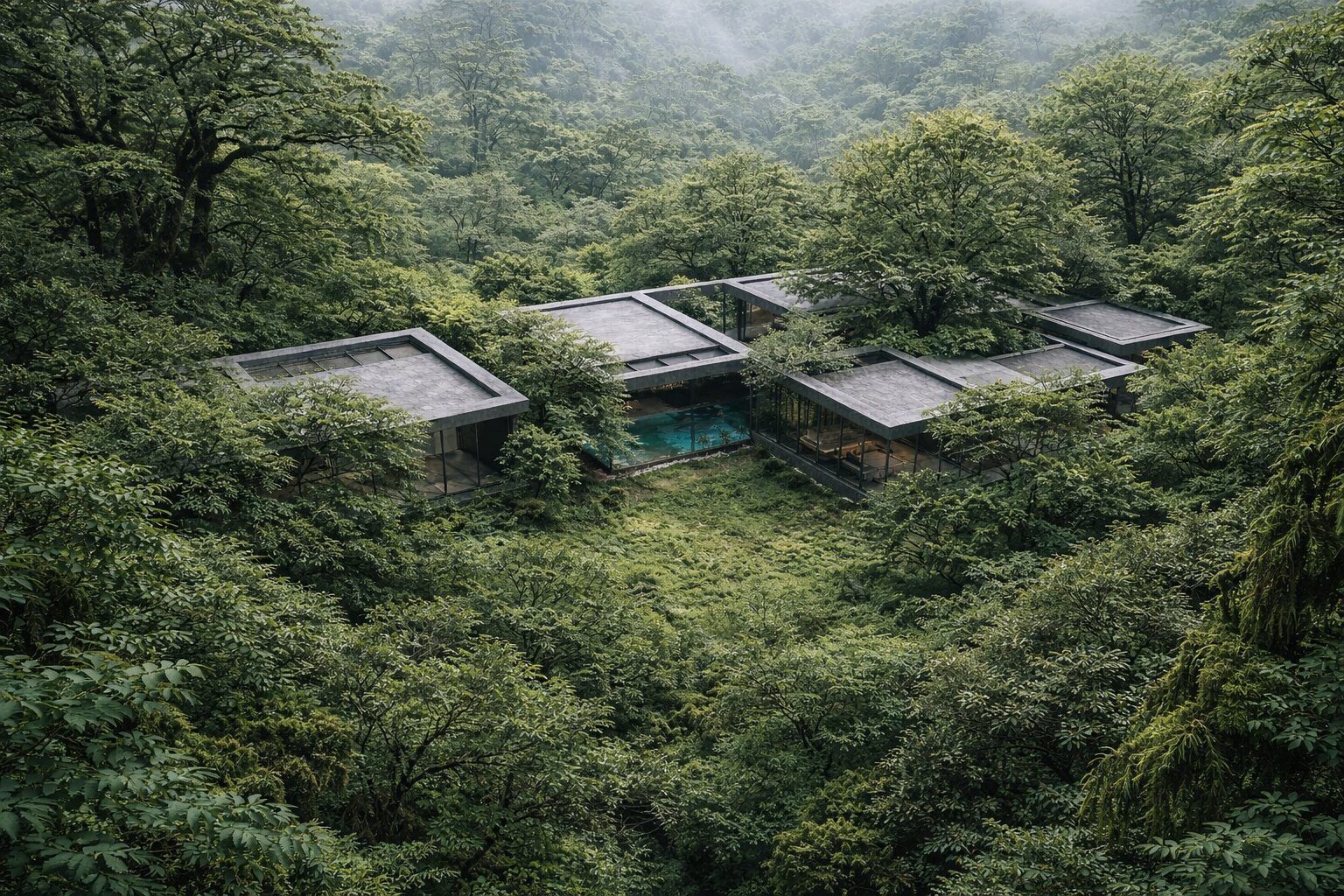
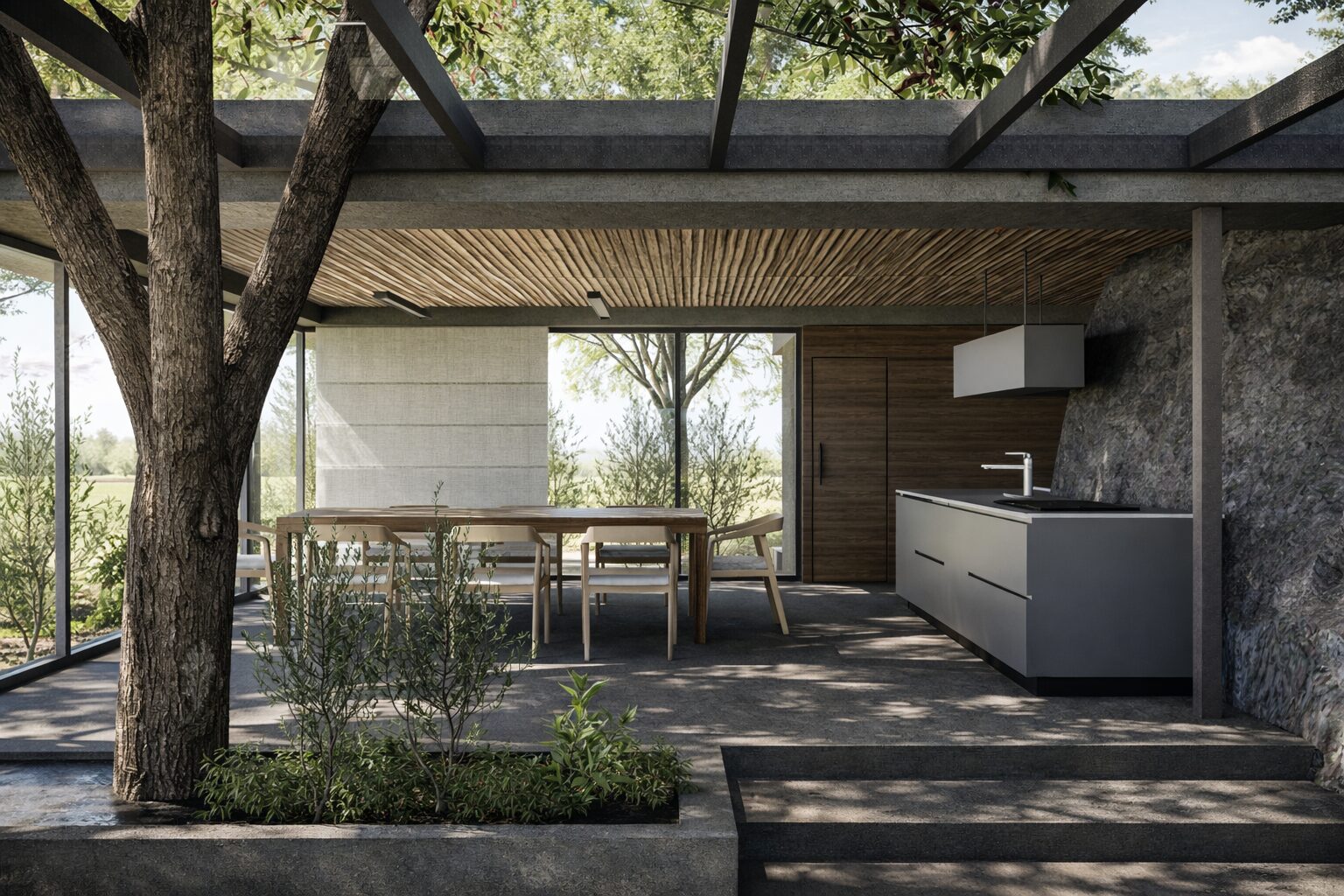
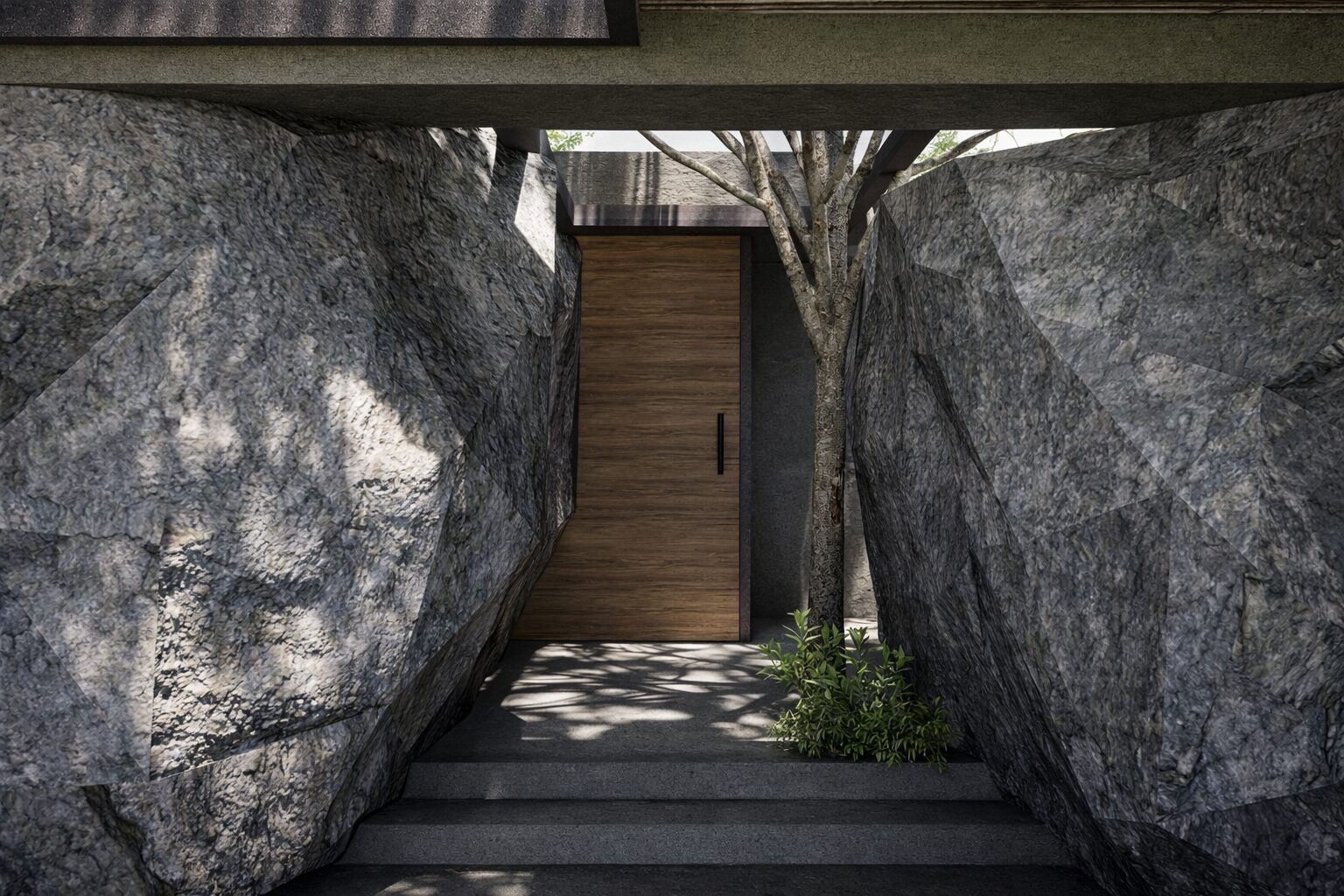
Located on the island of Yakushima, Japan—known for its ancient forests, rugged terrain, and extreme climatic conditions—the project is conceived as an architecture that exists in quiet dialogue with its environment. Yakushima’s landscape, shaped by time, rain, and dense vegetation, demands an approach rooted in restraint and respect. Rather than imposing a dominant form, the design accepts the site in its existing condition, allowing rocks, trees, and contours to guide spatial organization and architectural expression.
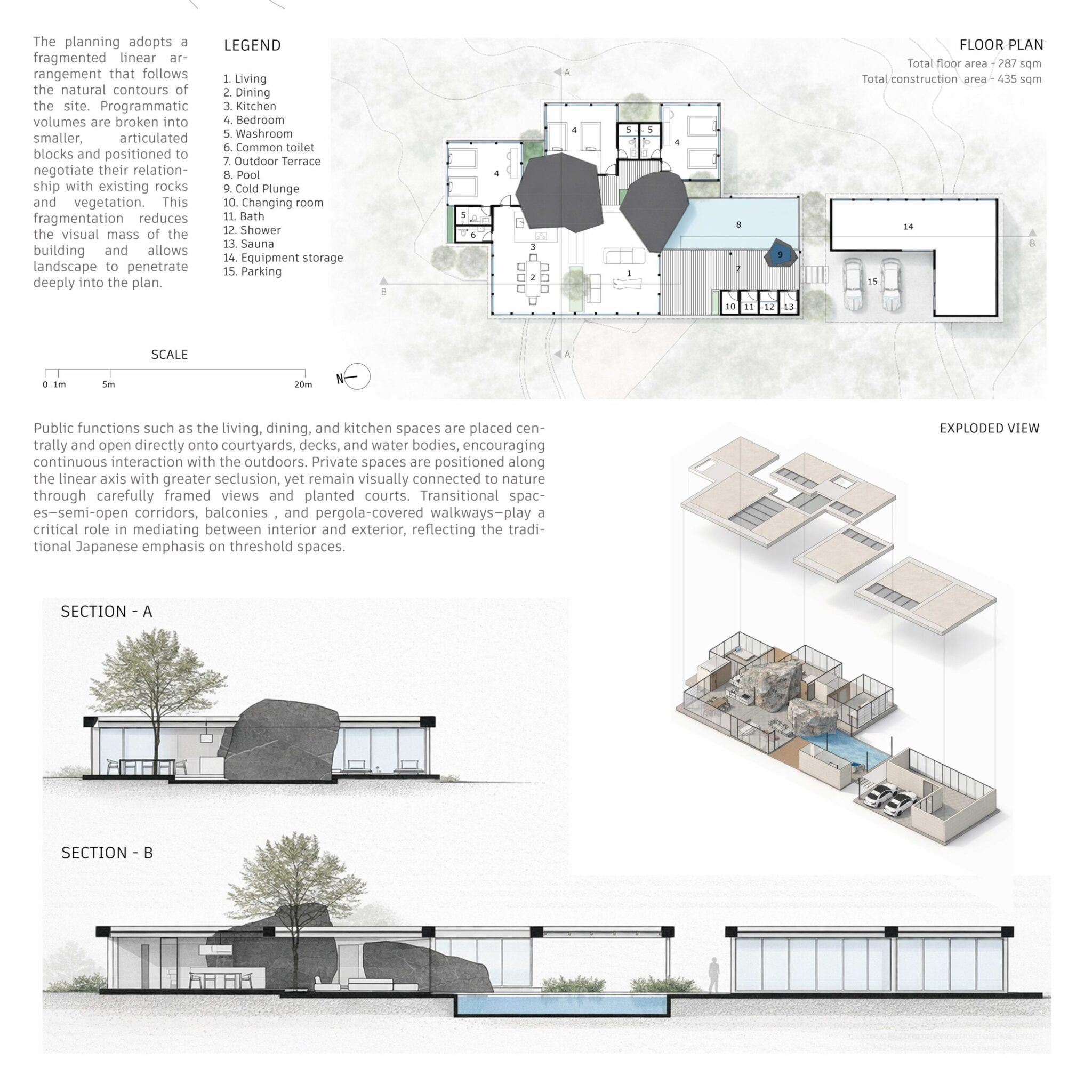
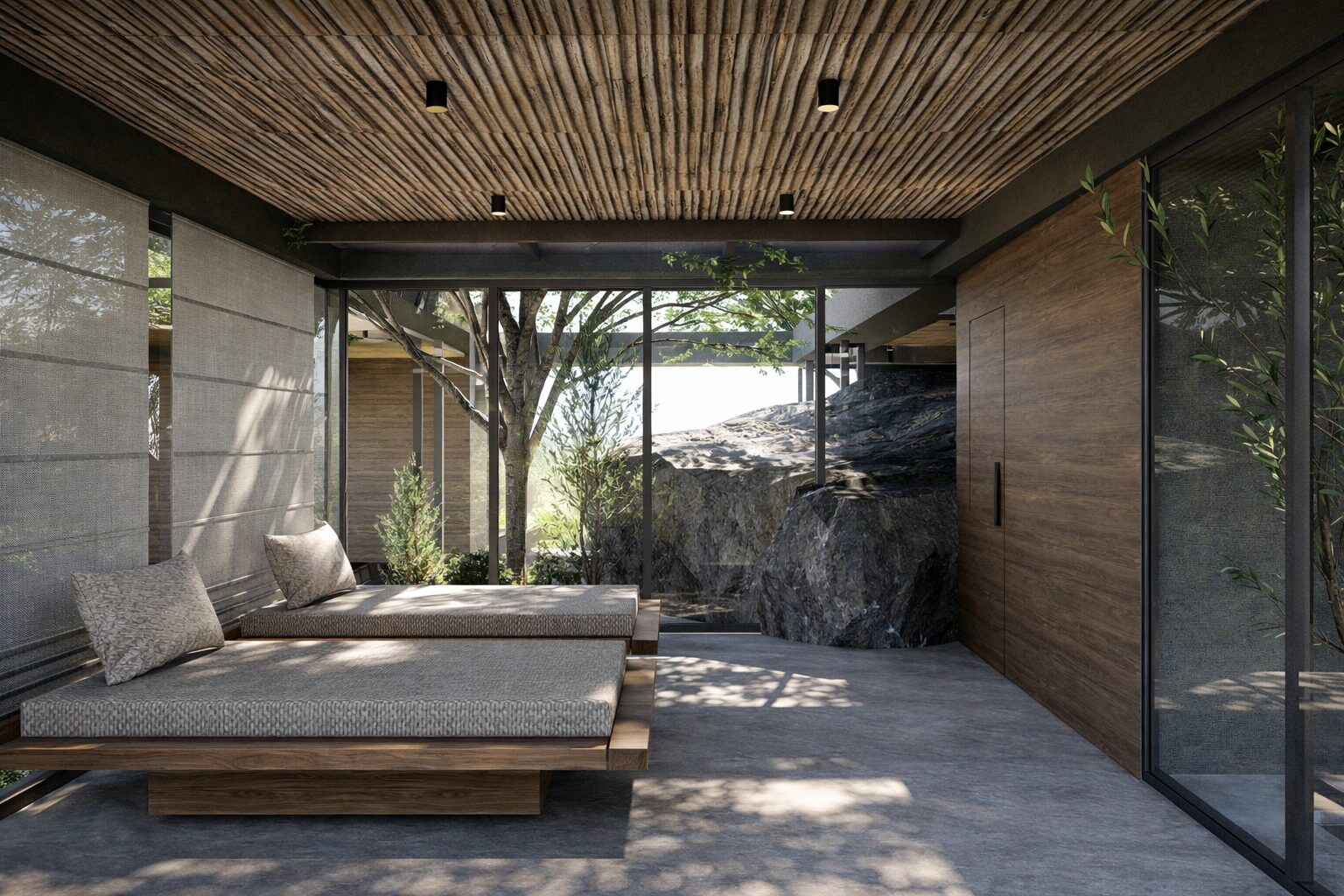
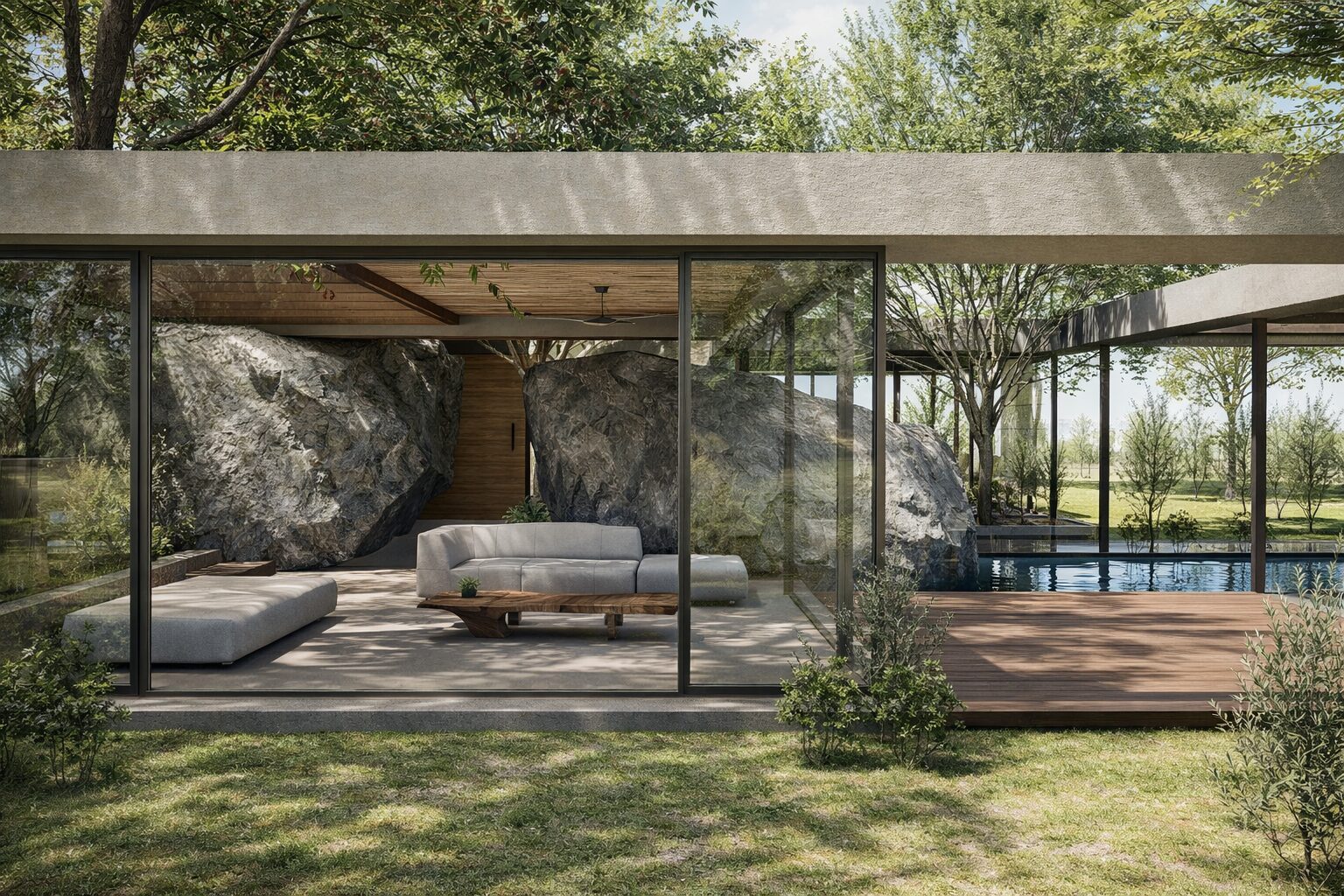
Two large rock formations on site become the primary generators of the design. These elements are preserved in situ and integrated into the plan, forming spatial anchors around which the architecture unfolds. The project is envisioned not as a single object placed on the land, but as a series of spaces discovered gradually—echoing the experience of moving through Yakushima’s forests, where enclosure, openness, and light continuously shift. Architecture here is understood as immanent—not added to the landscape, but revealed from within it.